Pharmacy Customer Experience

When most people start to this about segmentation in the pharmacy space, it becomes quickly overwhelming:

  • Age
  • Gender
  • Plan design
  • Geography
  • Income
  • Condition
  • Drug
  • New to therapy or ongoing therapy
  • Co-morbidities
  • Depression
  • Physician relationship
  • Support system
  • Education
  • Literacy
  • Etc.

I want to spend some time over a few posts beginning to break this down.  Today, let’s look at the five logical customer types:

  1. New Nancy:
    • Newly diagnosed
    • Not very familiar with her condition, the medication, the pharmacy process, or the PBM
    • Needs lots of hand-holding and education
    • Need to address gaps in the physician-patient encounter
    • Need to help her build a routine
  2. Caring Carin:
    • Caregiver for either dependents or parents
    • Picking up prescriptions for them and responsible for translating (sharing) information with them
    • Important to educate, but not the patient
    • Likely to be the “e-patient” but also stressed out (see sandwich generation)
  3. Sporatic Sam:
    • Someone who gets some acute medications occassionally (e.g., antibiotic)
    • Understands the healthcare system somewhat but not overly interested or engaged in the semantics
  4. Forgetful Frank:
    • Chronic medication user
    • Likely to have or develop multiple conditions
    • Not great with adherence to therapy
    • Understands their condition, but not worried about it (even if they should be)
  5. Steady Suzy:
    • Chronic medication user
    • One or more conditions
    • Understands the value of medication
    • Feels better when taking her medications
    • Actively managing her health
    • Generally adherent
    • Engaged with MD and pharmacist

I guess I could add Corrupt Cindy to talk about patients that abuse the system (a pharmacist friend of mine was telling me about a patient they caught this weekend with 6 different names across different pharmacies and a fake prescription pad). 

From a basic segmentation framework, are there others without getting into demographic attributes?

Benefits Package Blog Carnival


The new blog carnival (3rd edition) is up this morning with one of my submissions and lots of other great posts.  I would encourage you to visit or participate if you’re a blogger.  Thanks.

DBN: 2011 Pharmacy Predictions

Drug Benefit News (which is a must read publication) just came out with a summary of opinions from people about the new year (DBN, 1/7/11).  Here are a few highlights:

  • Focus on clinical programs to help MCOs hit their MLR targets
  • PBM consolidation and need for smaller PBMs to innovate (as my whitepaper discusses)
  • Potential for generic only formularies as generic fill rate is in the 70-80% range
  • Focus on specialty drug costs including the claims processed under the medical benefit (Express Scripts big push right now)
  • Outcomes based contracting (i.e., Merck and Cigna)
  • Direct contracting (i.e., Caterpillar, Delta)
  • Continued pharma shift to niche markets as brand oral solids make up <20% of claims
  • Health reform fallout
  • Continued streamlining and focus on MA and PDP
  • Continued innovation (i.e., Wal-Mart and Humana model)
  • Limited or restricted networks take off (finally)
  • Cost plus pricing
  • Modernizing Medicaid management and controlling costs

I was one of the people interviewed for the article.  My comments from the article are:

The things that I’m monitoring and think will affect the industry include mobile health, behavioral science application, preference-based marketing, risk based contracting, and integration with home monitoring devices. Rising costs will push several things such as increased management of the specialty benefit, more focus on adherence, and an increased understanding of how consumers impact health outcomes and how to best engage them. In 2011, innovations and changes in benefit design could include limited networks, more and more utilization management especially step therapy and 90-day retail or mail.

The biggest area of discussion in Medicare Part D right now is the Star Ratings. There are questions for PBMs about how they support the MA metrics and there are now specific PDP metrics. Understanding what those are, how to track them, how to influence them, and how to improve them will be a major focus in 2011.

New Pharmacy Whitepaper: Innovate Or Be Commoditized

In early 2009, I published an initial whitepaper on the PBM industry.  With all the changes going on in the industry, it seemed relevant to put out a new whitepaper although the total impact of reform and the definition of MLR is still TBD.  As I did before, I’m putting a summary here, and I welcome your comments.

You can download the whitepaper by registering on the adherence site at Silverlink Communications.  Thanks.  [If you’re a regular reader but not a logical client, you can request the whitepaper by contacting me.]

I think a quote from Larry Marsh (Managing Director, Equity Research) at Barclay’s Capital does a good job of summarizing it:

“Innovation will be increasingly important in the PBM world, as these companies seek to solve a greater set of pharmaceutical cost issues for their customers over the next 10 years.”

[BTW – If you want to get updates e-mailed to you as I post them, you can sign up here.]

************************

Innovate Or Be Commoditized: The PBM and Pharmacy Challenge for 2011

Doing more with less; dealing with constant change; and having technology be a part of everything…  Those are things that the next generation will take for granted.  For the rest of us, those are dynamics that are changing our personal and professional lives.  We’re constantly bombarded with information and decisions to make.

While the pharmacy industry has generally avoided the collapse of the automotive industry and the radical change of the health insurance industry, we’ve seen unprecedented change in the past few years.

It’s almost impossible to go a few days now without seeing information about prescription drugs in the mainstream news.  You might hear a financial analyst talking about the lack of blockbuster drugs in the pipeline.  You might read about a drug recall in USA Today.  You might see a new report talking about the $290B cost of non-adherence[ii] to the country.  Or, it might simply be water cooler discussions around how more than 25% of kids[iii] now take a prescription medication or how non-adherence can lead to hospital readmissions[iv].

This has raised the average consumer’s awareness of the industry and continues to push the trend of consumerism with which the entire healthcare industry is dealing.  Most of us in the industry already knew that pharmacy was the most used benefit (12 Rxs PMPY for PPO members[v]) and believed that pharmacists were a critical part of the care continuum.

The challenge now is for the industry to demonstrate their value beyond simple trend management.  The growth in generics will slow down while specialty spending grows.  Pharmacy and pharmacists have to become critical path in the care continuum and demonstrate how they engage consumers to improve outcomes.  It will become increasingly important to link outcomes and reimbursement as CIGNA Pharmacy did in their diabetes deal with Merck[vi].


[i] “Still More Pharma Jobs Go By The Wayside”, Pharmalot blog, posted on Nov. 3, 2010, http://www.pharmalot.com/2010/11/still-more-pharma-jobs-go-by-the-wayside/

[iii] Berkrot, Bill, “Prescription Drug Use By Children On The Rise”, Reuters, accessed on 1/4/11, http://www.reuters.com/article/idUSN1924289520100519?type=marketsNews

[iv] Leventhal MJ, Riegel B, Carlson B, De GS., Negotiating compliance in heart failure: remaining issues and questions, Eur J Cardiovasc Nurs., 2005;4:298–307 (abstract online at http://www.escardiocontent.org/periodicals/ejcn/article/S1474-5151(05)00038-1/abstract)

[v] Managed Care Digest Series: Key Findings, last updated Nov. 2010, http://www.managedcaredigest.com/KeyFindings.aspx?Digest=HMO

[vi] “CIGNA and Merck Sign Performance-Based Agreement”, CIGNA Press Release from April 23, 2009, http://newsroom.CIGNA.com/article_display.cfm?article_id=1043

CVS Caremark: Causal Link Between Adherence And Overall Costs

I’ve argued many times that prescription costs should (in many cases) go up not down.  But, the evidence to support that has often been anecdotal or from studies that people have struggled to replicate. 

CVS Caremark just released the results of their study “Medication Adherence Leads to Lower Health Care Use and Costs Despite Increased Drug Spending” in the January issue of Health Affairs.

  • Looked at pharmacy and medical claims
  • 135,000 patients
  • Patients with with one of more of the following – congestive heart failure, diabetes, hypertension, and dyslipidemia

“There have been many studies through the years that suggest adherence can save on health care costs, but the issue has not been central to health care cost discussions because those studies did not establish a causal link. We took the research further and what we found is that although adherent patients spend more on medications – as much as $1,000 more annually – across the board they spend significantly less for their overall health care costs”  by Troyen A. Brennan, MD, MPH, EVP and Chief medical Officer of CVS Caremark (source)

The savings associated with being adherent were:

  • Congestive heart failure = $7,823
  • Diabetes = $3,756
  • Hypertension = $3,908
  • Dyslipidemia = $1,258

It will be interesting.  Will this replace the “Sokol study” that everyone has historically quoted?  Will this lead to a rush of adherence programs for key conditions such as those studied here?  Will others try to replicate this study? 

I for one hope this changes the conversation from “prove the ROI” to show me how to best improve adherence across categories and segments of the population.  (To learn more about how Silverlink works with clients on adherence, you can go to our microsite.)

Humana and Concentra

I’d forgotten about this deal until someone sent me a note about 2010 earnings for Humana and the fact that this was Humana’s 11th acquisition over the past 5 years.  (Can you name them all?)

Given the push for ACOs and PCMHs and clinics, I think the acquisition of Concentra which owns 300 clinics and almost 250 on-site facilities is an interesting one.  It will give Humana another tactic for managing care and creating stickiness with employers.  I also think that clinics have a lot of opportunity to coordinate with pharmacy and improve adherence, therapeutic conversion, and use of mail order.  (See some of Joe Paduda’s comments here.)

With the Concentra staff, I’d be interested in seeing a deal with American Well or another company where they could be leveraged further in a virtual consultation setting with the option of driving them to a physical facility for follow-up. 

The other potential here is to leverage the clinics to improve HEDIS scores and STAR ratings

I think there is more to come here and with similar deals.

CVS and Universal American – 2 Additional Facts

Well, two things I didn’t know yesterday came out as everyone returned from vacation and started analyzing the acquisition.

  1. Adam Fein pointed out the close relationship that NCPA has with UA’s PDP plan and the fact that that is different from their prior relationships with CVS Caremark.  Will that change anything?
  2. Carl Mercurio points out that this now makes CVS Caremark the second largest PDP plan after United.

PPI “Dangers”?

PPIs are Proton Pump Inhibitors – e.g., Nexium, Prevacid, Prilosec, and Protonix.

For a long time, they were the second highest category of prescription spend (after anti-cholesterol drugs), but several of them are now available OTC (over-the-counter). 

In November, there was an article in the Experience Life magazine (from Lifetime Fitness) that highlighted a few things:

  • A 2009 study in the American Journal of Medicine suggested that up to 60% of PPI Rxs for hospitalized patients were unnecessary.
  • A 2009 study in Gastroenterology suggested that extended use of PPIs may worsen the symptoms they are designed to treat.
  • A 2006 study in JAMA reported that people taking long-term, high dose PPIs are 2.65 times more likely to experience hip fractures.
  • Studies published in JAMA in 2004 and 2005 reported that patients on acid-suppressing drugs are nearly twice as likely as unmedicated subjects to develop pneumonia. 

So, why were they so widely used?  Did the cure outweigh the risks?  Did physicians not know about these issues?  Was there no alternative?  Did direct-to-consumer advertising work?  Were the studies not valid?

I don’t know the answer, but I think it would be an interesting case study.

CVS Buys Universal American PDP Plan

I guess everyone’s on vacation since I haven’t seen much talking about this deal that was announced at the end of last year – CVS buying Universal American’s PDP plan.  The one post I saw was from someone who didn’t seem to have a clue. 

The reality here is that this is a good deal (IMHO).  I’m not speaking specifically on the price since I haven’t looked the financials, but more from the business strategy.  CVS Caremark has been actively moving forward over the past few years with new management (Per Lofberg and others), organizational changes, big wins (Aetna), success with their plan design, and many other research studies supporting their value proposition. 

Doubling down in one of the big areas of growth from both a population and a reform perspective makes a tons of sense.  Why wouldn’t you?  And, with the Star Ratings creating bonus opportunities, this is the time to jump in and focus on improving your quality metrics to get the bonus. 

[Note: I both work with CVS Caremark and own their stock.]

Predictors of Non-Adherence

From the literature…(NEJM 353:5 August 4, 2005, page 491) with my comments about how to address them.

  • Predictor: Presence of psychological problems, particularly depression
    • Study: vanServelien et al., Ammassari et al., Stilley et al.
  • Predictor: Presence of cognitive impairment
    • Study: Stilley et al., Kino et al.
  • Predictor: Treatment of asymptomatic disease  [Need aggressive reminder system to initial create habit]
    • Study: Sewitch et al.
  • Predictor: Inadequate follow-up or discharge planning.  [Educational follow-up]
    • Study: Sewitch et al., Lacro et al.
  • Predictor: Side effects of medication  [MD or RPh education of patient]
    • Study: van Servellen et al.
  • Predictor: Patient’s lack of belief in benefit of treatment
    • Study: Okuno et al., Lacro et al.
  • Predictor: Patient’s lack of insight into the illness  [New to therapy educational content]
    • Study: Lacro et al., Perkins
  • Predictor: Poor provider-patient relationship  [Tips to patients on how to interact with MD]
    • Study: Okuno et al., Lacro et al.
  • Predictor: Presence of barriers to care or medications  [Barrier survey and personalized info to address barriers]
    • Study: van Servellen et al., Perkins
  • Predictor: Missed appointments  [Appointment reminders]
    • Study: Servellen et al., Farley et al.
  • Predictor: Complexity of treatment  [MTM type services]
    • Study: Ammassari et al
  • Predictor: Cost of medication, copayment, or both  [Value based plan design]
    • Study: Balkrishnan, Ellis et al.

Save $30B in Medicaid (over next decade)

The big assumption around savings is always that you’ll have to cut benefits. What if that wasn’t true? Why wouldn’t the government be making those changes?

A new report by The Lewin Group explores this. 73% of Medicaid spending is based on fee-for-service plans that are administered by state officials. Not a big surprise to those of us that believe in the private market over big government, but they leave a lot of money on the table compared to Medicare and managed Medicaid.

The savings come from four areas:

  1. Generic Drug Dispensing: Medicaid FFS is less effective at encouraging the dispensing of generic drugs in place of brands. The generic dispensing rate in Medicaid FFS averages 68%, compared to an average 80% generic dispensing rate in Medicaid MCOs. While some of this difference is attributable to demographic differences between the Medicaid FFS and MCO populations, much of the generic dispensing difference persists when looking within each demographic subgroup.
  2. Dispensing Fees: At $4.81 per prescription, the national average dispensing fee that Medicaid FFS programs pay to retail pharmacies is more than double the average dispensing fees paid by Medicare Part D payers, Medicaid managed care organizations (MCOs), or health plans in the commercial sector.
  3. Ingredient Costs: The rate at which retail pharmacies are reimbursed for the actual medication ingredients (pills, capsules, etc) is also higher, on average, in Medicaid FFS programs than in Medicare Part D or the commercial sector.
  4. Drug Utilization: The number of prescriptions dispensed per person is typically higher for similar demographic subgroups in Medicaid FFS programs than in Medicaid MCOs for similar demographic subgroups due to less effective controls on polypharmacy, fraud, waste, abuse, and other factors in the FFS setting.

Their study estimates that converting all the FFS Medicaid to a Managed Medicaid model that relies on the typical PBM process would save almost 15% (or about $30B over the next decade).

The report also includes lots of comparative data (state by state) which shows the discrepancies across the US in terms of cost of FFS Medicaid.

Blog Tags via Tagxedo

A PR agency used Tagxedo in their holiday card.  I thought it was pretty cool.  You could comment about something with a hashtag in Twitter, and it would update the image.

There are lots of other things you can do.  I created two simple images – one for the blog and the other for my Twitter feed. 

Did You Pay Too Much?

I was looking at a few hints from Money Magazine about ways to shop smarter this season.  They are interesting from a communication perspective, but not always directly transferable to healthcare.

1. We pay more for items that we can touch…41% more.  And, the more time you spend holding the object, the more you were willing to pay for it later.  (How do we make healthcare services more tangible?)

2. Ever wonder why companies give you free chocolate?  It’s because people who eat even one increase their desire for luxury goods by 25%.  (What’s the “free chocolate” of healthcare?  How do we make consumers appreciate cognitive services by MDs and pharmacists more?)

3. People pay more when they’re distracted both online and offline.  And, how many of us aren’t distracted with kids and electronics these days?  (How do we get consumers to really focus to understand how to optimize their healthcare dollar?)

Is the Male “Customer” a Red Herring (in Healthcare)?

If you haven’t paid attention, the gender inequity in salaries in some areas seems to be broken.  For city-dwelling single people in their 20s, females median full-time income is 108% of their male counterparts (Reach Advisors research of 2008 Census Bureau data).

And, if you look at the statistics from “The Rise of the Sheconomy” in Time (11/22/10), the statistics paid a clear picture of change:

  • 35% of women (vs. 27% of men) ages 25-29 hold a bachelor degree or higher
  • Women hold 49.6% of non-farm jobs in the US
  • Women own 29% of companies
  • 64% of women with children under age 6 also work outside the home
  • Women make up 58% of online retail dollars spent
  • Women make 80% of healthcare decisions
  • Women purchased 45% of electronics
  • Women make up 44% of NFL fans
  • Women control 51.3% of the private wealth in the US
  • 35% of wives earn more than their husbands
  • 9 out of the 10 occupations predicted to add jobs in the next 8 years are dominated by women

You shouldn’t be surprised by this.  I personally have several friends that are the stay-at-home dads.  I worked for a women who had “never” been to a grocery store.  And, I know a lot of women who could tell you more about professional football than I could.  (Here’s an older list of facts.)

“Get the guy right and you’ve made a sale; get the woman right and you have a customer.”  (From Marti Barletta in the Time article)

So, will that play out in healthcare or has that ship sailed a long-time ago?  If females make 80% of the decisions, do you really need a male strategy?

Females accounted for 57 percent of all personal healthcare spending in 2004, although they made up just 50 percent of the U.S. population. Across all payers and services, females spent about $1,448 more per capita on healthcare than males in 2004. The greatest disparity was in nursing home care, where females spent nearly twice what males spent.

The gender divide in share of total spending should not come as a complete surprise, because women have a longer life expectancy (80.4 years compared to 75.2 years for men).

The estimates were based on administrative data from Medicare’s National Claims History Files, the Medicaid Statistical Information System and the Medicaid Analytic Extract System. (Source)

At the same time, we know that…

Men Frequently Ignore Symptoms and Are Reluctant to Seek Care Until There Is a Crisis

“Health, United States, 2009,” reports that men from ages 18-44 years were 70 percent less likely to visit a physician in 2007. The report also indicates that men were 80 percent less likely to have a usual source of health care, as compared to women. (source)

So, what does this all mean?  It means that males still represent about 1/2 the healthcare costs although it appears their use of the system is either prompted by a female in their live (wife, mother, sister, friend, caregiver) or by the fact that there is a crisis.  This plays well into the quote about targeted “shopping” versus looking for a relationship.

One could assume that means that males are more likely to use urgent cares and/or clinics…but I couldn’t find that data.

Getting males to be more preventative is one challenge.

Getting them to view a health plan or pharmacy as more tailored to their needs is another.

Is it worth the money and effort or should you (as a healthcare company) appeal only to the females?  I’m not sure I know the answer, but the data certainly points you in a direction.  It would be interesting to look at conditions that are primarily male or drugs that are tailored to male conditions and understand how females drive those decisions and utilization (knowing that a lot probably has to do with whether it’s asymptomatic or not.

Pharmacy Christmas List

In the spirit of the holiday, I thought I’d speculate on what might be on the list of a few constituents in the pharmacy world:

  1. Patients:
    • Less co-insurance [so I have a clue what I’m paying for my drugs]
  2. Pharmacists:
  3. Physicians:
    • More time, more pay, and less people and technology telling me what to do [even if it’s helpful much of the time]
  4. Retail Pharmacies:
    • Patients to actually appreciate our pharmacists, know their name, and stop switching for free things [coupons, drugs]
  5. Mail Order Pharmacies:
    • Client appreciation for the fact that mail is about more than money – adherence, therapeutic conversion
  6. Specialty Pharmacies:
    • More limited distribution drugs
  7. PBMs:
    • Consultants that look at more than the discount rate in spreadsheets AND
    • Clients that can tell the difference between us and are willing to be more aggressive about plan design
  8. Managed Care Pharmacy Teams:
    • An ability to blend medical, lab, and Rx data and demonstrate an impact of increased adherence on MLR
  9. Pharmaceutical Manufacturers:
    • A blockbuster drug OR a patent extension on my current drugs
    • BUT please no more recalls or black box warnings
  10. Generic Manufacturers:
    • An authorized generic deal where I make more money by doing nothing

Would Anyone Care If Pharmacy Support Was Offshore?

We’ve all had our bad experiences with an offshore call center, and I’d bet many of us have also had times when we didn’t even realize that we were talking to someone offshore.  Being offshore no longer means building a call center in India (which is now so cliche that they have a show about it – Outsourced).  It could be anywhere in the world.  Or, it could involve offshoring differing services – paper claims processing, clinical review, e-mail response, exception management, …

It certainly is less expensive per transaction although there are data integration costs, management costs, and other challenges.  The key question is whether the consumer cares.  I believe one PBM tried this years ago and got some backlash from their clients.  I’ve heard that another PBM is trying it again although I’m not sure it’s frontline customer support.

A lot of times people worry about data security, but that should be manageable.  (Plus there are enough data issues here in the US so keeping it onshore doesn’t seem to help.)

If the number on the back of your pharmacy card took you directly to an offshore call center, I believe some patients would care.

If the clinician reviewing your formulary exception or prior authorization request was offshore, I don’t think people would care.

If the people doing data entry and managing paper claims were offshore, I don’t think people would care.

Given that 50% of people misunderstand e-mails to begin with, I wonder if people would care that e-mail responses were from offshore (although they should be pretty generic since there’s no clinical information exchange happening).

Of course, there are economic times where sending anything offshore is frowned upon by the general public which views this as not supporting the US economy.

I’m just thinking out loud here.  Several people have brought it up to me, but I haven’t seen anything else about it.

(Note: This is different from outsourcing which is something that lots of companies do or centralizing the call center which some companies do.)

Does Playing Sports Mean Your Kids Get Enough Exercise?

I would have thought so.  If my kids were signed up for soccer or baseball, I would imagine that when they practiced that they met the daily expectations for kids.  (I’m pretty sure that the 1 mile run plus 75 minute swim practice for my daughter meets the requirements, but…)

The government’s guidelines for physical activity are that children get 60 minutes a day of moderate to vigorous activity.

What do you think?  In a 90-minute practice, would your kid get 60 minutes of activity? 

Unfortunately, the answer is no.  In a study published in the Archives of Pediatrics and Adolescent Medicine:

  • Kids were only getting 45 minutes of moderate to vigorous activity (which was 46% of their practice time).
  • Only 24% of those monitored met the goal.
  • Soccer was more active than baseball which is more active than softball.

In another study in Medicine & Science in Sports & Exercise, it showed the there are only 16 minutes of exercise seperates fit and unfit kids and that boys get more exercise than girls. 

Should you plan differently?

Should coaches train differently?

I’m not sure, but it puts an interesting spotlight on something that I for one would have taken for granted.

State Spending Per Medicaid Enrollee

I don’t post a lot of the information that I get from various press releases, but this one seems interesting.  It ranks the top 10 and bottom 10 states based on Medicaid spending…which is obviously very relevant as we move to more people being covered by Medicaid and also has relevance on physician participation with Medicaid.

This is from CoverageForAll.org and is based on the Kaiser data from statehealthfacts.org:

The 10 states with the highest Medicaid enrollee funding are as follows:

State

Medicaid Enrollees* Medicaid Payment Per Enrollee*

Total Federal

Medicaid Payment**

1. Rhode Island 195,400 $8,796 $  1,834,227,212
2. New York 4,954,600 $8,450 $47,618,463,035
3. District of Columbia 164,900 $7,932 $  1,445,734,028
4. Alaska 120,800 $7,815 $     890,169,313
5. New Jersey 954,000 $7,814 $  9,425,126,545
6. Minnesota 785,600 $7,700 $  6,977,657,315
7. Massachusetts 1,402,500 $7,490 $10,821,588,261
8. Connecticut 530,300 $7,357 $  4,543,549,844
9. North Dakota 69,400 $7,288 $     534,431,274
10. Pennsylvania 2,090,200 $7,159 $16,299,966,377

The 10 states with the least Medicaid enrollee funding are as follows:

State Medicaid

Enrollees*

Medicaid Payment Per Enrollee *

Total Federal

Medicaid Payment**

1. California 10,511,100 $2,701 $38,747,885,430
2. Arizona 1,455,800 $3,066 $  7,506,329,319
3. Georgia 1,685,000 $3,560 $  7,337,801,478
4. Oklahoma 719,200 $3,571 $  3,538,913,312
5. Texas 4,170,100 $3,598 $21,461,296,293
6. Arkansas 692,300 $3,617 $  3,287,326,144
7. Louisiana 1,096,500 $3,823 $  6,067,665,948
8. Hawaii 216,600 $4,051 $  1,206,716,133
9. South Carolina 891,600 $4,260 $  4,436,586,247
10. Michigan 1,855,500 $4,348 $  9,846,978,779

*Kaiser State Health Facts Medicaid Payment Per Enrollee 2007

**Kaiser State Health Facts Total Federal Medicaid Payment 2008

Should I Give An Expensive Drug To A Patient That Will Likely Be Non-Adherent

This is a tough but interesting question.  If I know that a patient is not likely to take their medication for very long (i.e., be non-adherent) for whatever reason, should I pay for their drug?  For a long-term maintenance medication, if they only take it for 3 months and then stop, I’ve just wasted money. 

For a generic drug, this isn’t much of an issue.  My cost is low.

For an average priced brand drug, this is probably a calculated risk.

BUT, for an expensive specialty medication that might cost $10,000 (or more) a month, this is an interesting ethical question.

  • Can I really predict their likelihood of being adherent?  If I’m sure their not going to be adherent, why pay for the medication?
  • Can I put some burden on the patient (e.g., your copay is $50 per month, but if you stop taking it within 6 months, we’ll bill you $1,000)?  In theory, that creates an interesting stick / carrot, but since I’m not going to sit there and monitor them (unless it’s an injectible which is provided in the physician’s office), that would likely lead to some manipulation?

I was looking at an article this morning about how FICO (credit scores) can be used for predicting adherence, and it made me think of this issue. 

Another reason to keep your credit scores up?  I doubt it will ever be used this way, but it does show how information crosses from one area of our live to another.  On the flipside, it also indicates that behaviors in one area may be good indicators of behaviors in another area.

Adherence More Important Than Technology

This is a great quote:

“Increasing the effectiveness of adherence  interventions is likely to have a far greater impact on population health… 

  than any improvement in medical treatments, including highly promising advances in biomedical technology”.

–World Health Organization (WHO) report, Adherence to Long-Term Therapies: Evidence for Action. 2003

What Happens When You Get A New Home Phone

We just added another phone line (land line) to our home.  (Bucking the trend of only using mobile phones, we now have 4 home phone lines plus our mobile phones.)  I’ve been intrigued to see what happens.  I haven’t given the number to anyone nor have I had the time to put it on the DNC list.  (I’m not even sure what the number is.)

But, in the week since I’ve plugged in a phone, I’ve gotten a bunch of calls:

  • 918-442-0768 (looks like spam based on the 800notes.com site)
  • 918-442-0926 Home Security (selling security systems from whocallsme.com site)
  • 636-925-1746 PISA Group (this was someone selling me the local paper)
  • 800-238-3770 (looks like telemarketing from DirectTV based on 800notes.com site)

They have each called me an average of 4 times in one week.  I think the phone companies should default you into the DNC list and force you to opt-out.  But, they must make money by doing it the way it is today.

Alternative Pharmacy Network Whitepaper

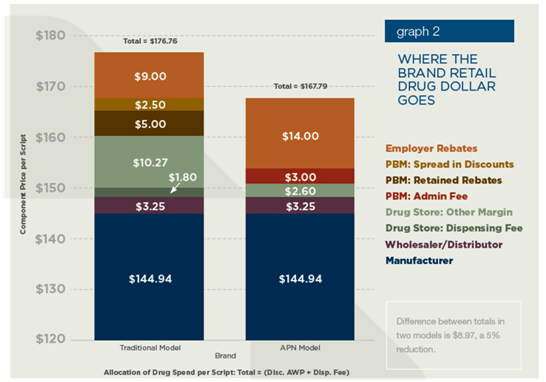
Milliman recently put out a whitepaper commissioned by ReStat on “Alternative Pharmacy Network” savings. My general opinion is that they use a lot of data and analysis mixed with some sensationalist statements to make the very obvious point that creating a limited or closed pharmacy network will save you money. (I hope they didn’t charge much for this.)

Net-Net: Limited or tier pharmacy networks are a great idea.  ReStat is building on their experience with Caterpillar which is a great program.  But, the whitepaper was flawed. 

Their conclusions were:

  • Potential Savings – The analysis shown in this report suggests that APN programs can offer a significant savings to employers relative to traditional networks. For an assumed range of consumer use of participating pharmacies, an employer with 10,000 lives could save $200,000 to $620,000 per year, depending on benefit design, without changing cost-sharing structures (see Table 3). Benefit design changes could increase or decrease the savings. A closed APN network (no coverage for non-APN pharmacies) would increase savings for a given benefit design.
  • Sources of Savings – In our analysis, the APN model can achieve lower cost because the PBM and retail pharmacy retain less revenue.
  • The Value of Limited Networks for Pharmacies -For medical benefits, health plans use network providers as part of overall quality and efficiency programs and are promoting network programs such as medical homes and pay-for-performance. Sponsors and PBMs can extend the advantages of networks to the pharmacy benefit. However, the ability to obtain value in a locale depends on the willingness of some pharmacies to participate as network members.
  • Plan Design Changes – Plan sponsors may need to change their plan designs to encourage use of the limited network. For example, the copays for limited network pharmacies may need to be decreased (from current levels) and/or the copays for non-network pharmacies may need to be increased to create a benefit differential between the network and non-network pharmacies. These plan design changes could reduce or increase the projected savings of a limited network, depending on the specific change.


My comments about their analysis:

  • They assumed that retail pharmacies would reduce their spread on generics by 44% (and brands by 78%) to be part of a limited network. That might be true for a large client with geographic concentration and for a retailer with low market share, but I think that’s a leap. (see chart below on brand pricing assumptions)


  • They say that spread for retail claims for PBMs can be 10-15% of AWP. I’ve seen plenty of deals that were negative (at least on brand drugs). In many cases, spread pricing doesn’t even exist.
  • They claim that PBM’s make money “(as part of a typically Drug Utilization Review program) actively encourages patients to switch to different medications as a core part of its business.” Really. That went out with the AG settlements back around 2004. Chemical substitution to generic equivalents certainly happens, but using DUR to push therapeutic conversion. I don’t think so.
  • They claim that PBM’s will buy drugs and repackage them to get a higher reimbursement rate at mail. I’ve never seen it (but that doesn’t mean it’s not done).
  • MAC pricing at mail. Yes. PBMs do make most of their money on generics at mail, and I’ve talked about the need to align your MAC lists at retail and mail before.
  • They also say “While mail order presents the opportunity to save sponsors money, attempts to encourage mail order by reducing copays could increase sponsor cost if the benefit plan is poorly designed (e.g., copays are reduced too much), utilization increases, or generic dispensing decreases.” I’ve talked about why clients lose money at mail before, but I’m pretty sure that there have been plenty of studies that show adherence improves (not unnecessary utilization). Studies have also shown that if you adjust for acute medications at retail then the generic dispensing rates are very comparable at retail and mail (or explained thru population differences).
  • They claim that the PBM’s make 10-15% on specialty drugs that they dispense (which seems high to me) and then use $5,000 per month as a number when the average 30-day supply of a specialty drug is more like $1,500.
  • They claim “Different manufacturers offer different rebates, which may factor into a PBMs decision making.” I think if you read the P&T process documents you would see that decisions about in or out are made based on clinical decisions and then a formulary can be broad or narrow based on the net price to the plan sponsor which does (and should) evaluate rebate impact.
  • They quote a source saying that 35% of rebates are kept by PBMs. Again, that seems really high. In my experience, there was an administrative fee equal to several percent of the AWP of the drug that was kept but the rebate dollars were passed to the plan sponsor.


While I like the simplicity of the flat fee payment model (i.e., I pay my PBM $3.00 per claim), it certainly creates no incentive for them to do better year over year in improving their negotiating with pharma and retailers or to worry much about trend management.

They talk briefly and seem to encourage ReStat’s Align product which seems like a very logical approach (used by other PBMs also).

Restat configures custom retail networks and benefit designs that create incentives to encourage member use of alternative in-network pharmacies and allows consumers the ability to shop based on price as well as service. Non-network pharmacies are also available but at a higher copay or costs.

Press Hits in 2010 (and before)

2010 was a good year.  21 press hits.  (Thanks to a great press team at Silverlink that supports my ideas.)

This built on some success with the press in 2008 (2) and 2009 (15).

Just out of interest, I went to pull some older press hits from pre-Silverlink:

AND, I finally found a link to my first healthcare publication in the International Journal of Radiation Oncology Biology Physics on using activity based costing to compare different treatment options.

Will MLR Definition Affect PBMs…Maybe

I’ve been getting this question a lot lately. Honestly, I haven’t heard a convincing argument either way (but I also haven’t had time to read the definitions in detail).

From what I can tell, there are a few factors:

  1. Will the definition allow mail order claims to be fully processed as medical costs? If yes, this may be a huge boost from retail-to-mail programs across the industry and could change the market for PBAs (Pharmacy Benefit Administrators) that don’t have their own mail order pharmacies. If it clearly doesn’t allow affiliates (or captive PBMs) of the managed care company to get the same treatment, that could certainly create some interesting discussions about pharmacy assets at places like Cigna, Humana, Kaiser, or Regence. Would they get more value out of long term deals like Aetna has with CVS Caremark?
  2. Will the definition only force retail claims to be broken out into ingredient costs and administrative costs? If so, would you see the death of administrative fees and dispensing fees? If dispensing fees disappeared, would you see discounts going back to where they were a few years ago (i.e., just a shifting of profit)? Or, would you see a whole different contracting strategy where retailers would work to contact directly (like the Walgreens and Wal-Mart deals with Caterpillar) with payers and employers and would that allow them to get the same treatment as mail order? If that happened, that would change the spread model at PBMs and could be a boost for PBAs.

There are also broader implications to payers about decisions to insource other things like disease management or medication therapy management (MTM). If they get better treatment by outsourcing them, would PBMs jump into that market more than they are today? It would be an interesting discussion. Certainly, the big PBMs have lots of cash and there are several standalone DM companies.

Why Don’t You Get A Thank You From Your Provider

From someone in the industry, this is going to seem like a silly question.  BUT, from a customer perspective, I think it makes a lot of sense.

  • Why don’t I get a thanks from my physician for coming to them?
  • Why don’t I get a thank you from the hospital after choosing them for my surgery?
  • Why don’t I get a thank you from the pharmacy for choosing them?

Is it that we’ve grown away from such niceties?  Is it that we don’t think we should thank the customer?  Is it that we think we deserve their business?

People often ask about topics like retention or loyalty or satisfaction.  I was just thinking wouldn’t it be nice if one of my initial experiences was a quick thank you card from the provider that I just used for the first time.

The 11 Dimensions Of Non-Adherence

I found this nice summary document on MAPS (Medication Adherence Profiling System) which was part of the Boehringer Ingelheim Pharmacy Satisfaction 2009 Medication Adherence Study.  Here are the dimensions and key issues:

  1. Reminder tools to address memory and confusion
  2. Enhance communications to address perceived ineffective communications
  3. Financial assistance to address monetary concerns
  4. Heighten transparency to address distrust of healthcare providers
  5. Promote regimen to address not taking medication as prescribed
  6. Practice discretion to address interpersonal discomfort and social barriers
  7. Empower the patient to address perceived negative consequences
  8. Confront avoidance to address denial and fear
  9. Demonstrate efficacy to address the perception that medication doesn’t work
  10. Allay concerns to address negative attributes of medication
  11. Continue touchpoints to address the lack of belief in the importance of ongoing therapy

The document goes on to give sample strategies and tactics for each dimension.

Express Scripts To Grow The “Select” Programs

It looks like the concept of “Select” Home Delivery which has been one of the products to come out of the Consumerology approach at Express Scripts is about to get some cousins such as Select Step Therapy, Select Networks, and Select Specialty.  Obviously, the concept of Active Choice has legs.  (I understand the networks and specialty, but I’m not sure what the step therapy product will look like.)

(Here’s a good article from the Brookings Institute on choice architecture for healthcare enrollment.)

The concept of choice has to do with the decision framework with which options are presented.  Making it active choice typically refers to the requirement of the consumer having to make a decision.  They can’t do nothing.  This doesn’t mean that the company can’t select a default recommendation, but it can’t implement that option without the consumer verifying it.  (See the book Nudge for more details on this concept.)

The example that is often used for choice architecture is enrollment into 401K plans.